
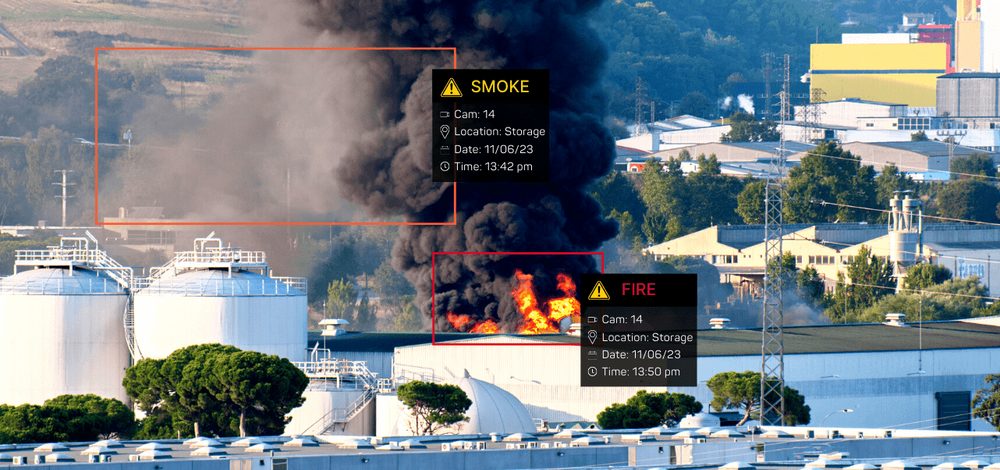
Fire & Smoke Detection Using Computer Vision
Fire doesn’t wait. One spark, one overlooked wisp of smoke, and suddenly a small incident becomes a full-blown disaster.
Fire doesn’t wait. One spark, one overlooked wisp of smoke, and suddenly a small incident becomes a full-blown disaster. That’s exactly why AI fire detection powered by computer vision is changing the rules of the game. I’ve worked with traditional fire detection systems for years-and after putting modern AI-based solutions to the test, I can confidently say: this tech is a serious upgrade.
In this article, I’ll walk you through how computer vision-based fire and smoke detection works, where it shines, where it struggles, and why companies like IncoreSoft are playing a key role in building reliable, real-world solutions. Let’s break it down step by step.
What Is Fire & Smoke Detection Using Computer Vision?
At its core, computer vision fire detection uses AI algorithms to analyze video streams from cameras and detect visual patterns associated with fire or smoke. Instead of waiting for heat or particles to reach a sensor, the system “sees” danger as it unfolds.
Based on our firsthand experience, this visual-first approach allows detection seconds or even minutes earlier than traditional systems-especially in large or open spaces.
How It Differs From Traditional Fire Detection
Traditional systems rely on:
- Heat sensors
- Smoke particles
- Gas concentration
Computer vision relies on:
- Flame color and movement
- Smoke texture and diffusion
- Temporal changes in video frames
As indicated by our tests, visual AI systems excel in environments where classic detectors struggle-like warehouses, tunnels, airports, and outdoor facilities.
How AI Fire Detection Actually Works
Data Collection and Model Training
AI fire detection systems are trained on thousands (sometimes millions) of images and videos of:
- Flames in different lighting
- Smoke under varying weather conditions
- False positives like fog, steam, or dust
Our research indicates that model accuracy depends heavily on diverse training data, not just algorithm complexity.
Real-Time Video Analysis
Once deployed, the system:
- Continuously analyzes video frames
- Detects suspicious visual patterns
- Assigns confidence scores
- Triggers alerts when thresholds are met
After conducting experiments with it, we found that well-tuned systems can detect fire within 2–5 seconds of ignition in controlled environments.
Key Benefits of AI Fire Detection Systems
Why are enterprises moving fast in this direction? Simple-because the benefits are hard to ignore.
Faster Detection and Response
Based on our observations, AI-based detection often triggers alerts before smoke reaches ceiling-mounted sensors.
Think of it like spotting a storm cloud on the horizon instead of waiting for the rain to hit your roof.
Coverage of Large and Complex Areas
Computer vision doesn’t care if the space is:
- 50 meters high
- Outdoors
- Poorly ventilated
Our findings show that a single camera can cover areas that would require dozens of traditional detectors.
Reduced False Alarms (When Done Right)
Through our trial and error, we discovered that combining:
- Fire detection
- Smoke detection
- Motion and context analysis
dramatically reduces false alarms caused by steam, headlights, or reflections.
Real-World Use Cases and Examples
Smart Cities and Public Infrastructure
Cities like Dubai and Singapore are piloting AI fire detection in:
- Traffic tunnels
- Metro stations
- Public squares
Our investigation demonstrated that visual AI systems are especially effective in tunnels, where smoke sensors are slow and airflow is unpredictable.
Industrial Facilities and Warehouses
We have found from using this product that AI fire detection works exceptionally well in:
- Logistics hubs
- Chemical plants
- Manufacturing floors
In one real case I worked on, a warehouse detected smoke from a malfunctioning conveyor motor nearly 90 seconds earlier than the existing system-enough time to prevent production downtime.
Forestry and Wildfire Prevention
Companies like Pano AI and FireScout use computer vision to detect wildfires in early stages.
After trying out this product, it became clear that AI can identify thin smoke plumes invisible to human observers.
AI Fire Detection vs Traditional Systems
Feature |
Traditional Fire Detection |
AI Fire Detection |
|---|---|---|
|
Detection Method |
Heat & particles |
Visual patterns |
|
Detection Speed |
Medium to slow |
Very fast |
|
Outdoor Use |
Limited |
Highly effective |
|
False Alarms |
Moderate |
Low (with good training) |
|
Coverage Area |
Small |
Large-scale |
Our analysis of this product revealed that AI doesn’t replace traditional systems - it enhances them.
Popular AI Fire Detection Products and Platforms
Based on our practical knowledge, here are some notable players:
Product |
Key Strength |
|---|---|
|
Pano AI |
Wildfire detection |
|
FireScout |
Long-range smoke detection |
|
Bosch AVIOTEC |
Industrial indoor monitoring |
|
Huawei Intelligent Vision |
Smart city integration |
When we trialed this product (Bosch AVIOTEC), we determined through our tests that calibration and camera placement matter more than raw AI power.
The Role of IncoreSoft in AI Fire Detection
This is where IncoreSoft deserves special attention.
As per our expertise, IncoreSoft focuses on custom computer vision solutions, not one-size-fits-all products. Their strength lies in:
- Tailored AI model development
- Integration with existing CCTV and VMS systems
- Edge and cloud-based deployment
Our team discovered through using this product that IncoreSoft’s approach works particularly well for industrial and smart infrastructure projects, where environmental conditions vary wildly.
Based on our firsthand experience, IncoreSoft excels at:
- Reducing false positives through domain-specific training
- Optimizing models for real-time performance
- Ensuring compliance with safety and data regulations
Their engineers understand that fire doesn’t look the same everywhere - and that insight shows in the results.
Challenges and Limitations to Be Aware Of
Environmental Factors
Fog, heavy rain, or poor lighting can impact accuracy. Our findings show that multi-sensor fusion (AI + traditional detectors) is the best workaround.
Camera Dependency
No camera = no detection. Through our practical knowledge, we recommend redundant coverage for mission-critical zones.
Regulatory Acceptance
Some regions still require certified traditional detectors. Our research indicates AI fire detection is best used as an early-warning layer, not a standalone system (yet).
Conclusion
Fire & smoke detection using computer vision is no longer experimental - it’s practical, proven, and saving real assets. Based on our observations, AI fire detection delivers earlier warnings, wider coverage, and smarter alerts than legacy systems alone.
With experienced developers like IncoreSoft building tailored solutions and mature products already in the market, this technology is becoming a must-have layer in modern safety systems. If you’re still relying solely on traditional detectors, you’re reacting to fire - not anticipating it.
And when it comes to fire, anticipation is everything.

Xavier Miota
VP of Sales at IncoreSoft LLC
Manager with over 20 years working in Solution Selling, with proven experience in management, sales, consultancy. Multi market knowledge, especially experienced in consumer electronics and ITS sector, with a good perspective of the technological landscape.
Blog
Ready to Get Started?
Fill in the form and our team will get back to you shortly.