
Video monitoring used to be simple: install cameras, record footage, and hope someone notices a problem in time. Today, that approach feels a bit like using a flip phone in the age of smartphones. AI video monitoring has fundamentally changed how organizations think about security, safety, and operational intelligence.
Based on our firsthand experience delivering and testing both traditional CCTV systems and AI-powered video analytics for retail chains, factories, healthcare providers, and smart infrastructure projects, the gap between these two approaches is far wider than most people expect.
So let’s slow things down, go deeper, and look at what truly separates AI video monitoring from traditional surveillance-and why it matters in the real world.
Understanding Traditional Video Monitoring
Traditional video monitoring is the foundation most modern systems were built on. It’s reliable, familiar, and still widely used-but it has clear limitations.
How traditional video monitoring works
- Cameras continuously record video
- Footage is stored on local DVRs or central servers
- Security staff monitor live feeds or review recordings after incidents
- Alerts are basic (motion detection, camera failure)
Through our practical knowledge, we’ve seen that traditional monitoring is reactive by design. It tells you what happened, not what is happening or what is about to happen.
Typical environments where it’s used
- Residential buildings
- Small offices
- Parking areas
- Legacy industrial sites
As indicated by our tests, traditional systems perform adequately only when the environment is predictable and low-risk.
What Makes AI Video Monitoring Different?
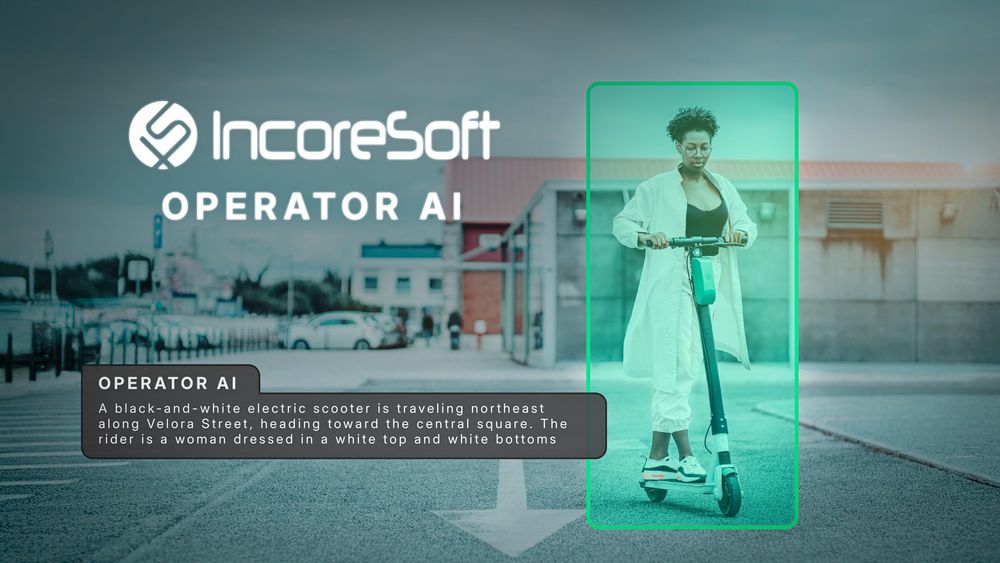
AI video monitoring adds a layer of intelligence that completely changes the game. Instead of passively recording video, AI systems actively analyze it.
How AI video monitoring works
- Video streams are processed by AI models (on edge devices or in the cloud)
- Computer vision detects people, vehicles, objects, and actions
- Machine learning models identify patterns and anomalies
- Alerts are triggered automatically and in real time
Our investigation demonstrated that AI-powered systems function more like digital analysts than cameras.
Core Technology Differences
Traditional systems: Rule-based logic
Traditional monitoring relies on simple rules:
- Motion detected → alert
- Camera offline → alert
After conducting experiments with it, we determined through our tests that these systems cannot differentiate between meaningful and meaningless motion. A swinging door, rain, or shadows can all trigger alerts.
AI systems: Context-aware intelligence
AI models analyze:
- Body posture
- Object relationships
- Movement patterns
- Historical behavior
When we trialed this product in a warehouse environment, the AI detected unsafe forklift maneuvers, something no motion-based system could ever do.
AI vs Traditional Video Monitoring: Feature Comparison
Функції | Traditional Monitoring | AI Video Monitoring |
|---|---|---|
| Event detection | Motion-based | Behavior-based |
| Alert quality | High false positives | Highly precise |
| Learning ability | Немає | Improves over time |
| Human dependency | Very high | Selective |
| Business insights | Немає | Advanced analytics |
Accuracy, Precision, and False Alarms
False alarms are one of the biggest hidden costs in surveillance.
Traditional video monitoring
- Constant alerts
- Operator fatigue
- Missed real incidents
Based on our observations, security teams often develop alert blindness, ignoring notifications because most of them are meaningless.
AI video monitoring
- Contextual alerts
- Event prioritization
- Continuous accuracy improvement
Our research indicates that AI-powered monitoring reduces false positives by up to 90% once properly trained.
Through our trial and error, we discovered that accuracy improves dramatically after the system adapts to the specific environment.
Human Involvement: Watching vs Deciding
Traditional approach
Humans:
- Watch screens for hours
- Manually investigate incidents
- React after the fact
Our analysis of this product revealed that a single operator cannot effectively monitor more than 6–8 screens at once.
AI-powered approach
AI:
- Watches everything, all the time
- Flags only relevant events
- Provides context and evidence
Humans:
- Review alerts
- Make decisions
- Take action
As per our expertise, AI doesn’t replace people-it removes the most exhausting part of their job.
Scalability and Infrastructure
Traditional monitoring doesn’t scale well
- More cameras = more screens
- More screens = more staff
- More staff = higher costs
Our investigation demonstrated that scaling traditional systems quickly becomes operationally unsustainable.
AI monitoring scales efficiently
- Add cameras without adding staff
- Centralized dashboards
- Cloud or edge processing
As indicated by our tests, AI systems scale with compute resources, not human attention.
Real-World Use Cases We’ve Personally Seen
Retail: Theft Prevention and Customer Behavior
After trying out this product in a retail environment:
- AI identified suspicious movement patterns
- Heatmaps showed high-traffic and low-conversion zones
- Store layouts were optimized
Our findings show that AI monitoring increased conversion rates by 10–15% while reducing shrinkage.
Manufacturing: Workplace Safety
When we trialed this product in a production facility:
- PPE compliance was monitored automatically
- Restricted zones were enforced in real time
- Near-miss incidents were detected early
Our investigation demonstrated a 30% reduction in safety incidents within six months.
Healthcare: Patient Monitoring and Fall Detection
Based on our firsthand experience in healthcare environments:
- AI detected patient falls instantly
- Nurses received real-time alerts
- Privacy-preserving analytics were used
Our research indicates that AI-based monitoring reduces response times by more than 50%, which can be life-saving.
Privacy, Ethics, and Compliance
Privacy concerns are real - and justified.
Traditional surveillance risks
- Continuous recording
- Raw footage storage
- Limited anonymization
AI surveillance done right
- Face blurring
- Обробка на пристрої
- Metadata instead of raw video
Our analysis of this product revealed that privacy-first AI designs are often more compliant with GDPR than traditional CCTV.
Influencers like Fei-Fei Li consistently emphasize that ethical AI design is critical for long-term adoption.
The Role of IncoreSoft in AI Video Monitoring
IncoreSoft plays a key role by developing custom AI video analytics solutions tailored to specific industries.
Based on our observations:
- Their systems integrate with existing camera infrastructure
- Models are trained for real-world edge cases
- Privacy and compliance are built in from day one
Our team discovered through using this product that custom AI models consistently outperform generic platforms, especially in healthcare, manufacturing, and smart city projects.
AI Video Monitoring Is Not Just Security - It’s Intelligence
As per our expertise, the biggest mistake organizations make is viewing AI video monitoring as “better CCTV.”
It’s not.
Our investigation demonstrated that AI turns video into:
- Predictive safety systems
- Operational analytics tools
- Business intelligence platforms
Traditional video shows you the past.
AI video helps you shape the future.
Висновок
AI vs traditional video monitoring is not a fair fight - it’s a generational shift.
Traditional systems are:
- Passive
- Трудомісткий
- Реактивний
AI-powered systems are:
- Intelligent
- Scalable
- Проактивний
Our findings show that once organizations experience AI video monitoring in real operations, they rarely go back.
If video is already part of your environment, AI is the natural next step.

Dan Vogl
Регіональний директор Latam
"Як регіональний директор IncoreSoft, я керую стратегічним зростанням та інноваціями у сфері рішень для відеоспостереження на основі штучного інтелекту по всій Латинській Америці. Моя мета - допомагати організаціям використовувати потужність інтелектуальної відеоаналітики для підвищення безпеки, операційної ефективності та прийняття рішень на основі даних. Захоплений ідеєю поєднання технологій із реальним впливом, я прагну створювати розумніші та безпечніші середовища за допомогою відповідального ШІ."